Tiny House: How We’re Designing a Small Space for Everyday Living

28 April 2026

Nestled in the beautiful mountain town of Highlands, North Carolina, Jen’s Tiny House is a cozy, coastal cottage that meets mountain warmth from the ground up.​ 

Under 500 square feet, every inch of this home has been planned out carefully: what goes where, how it looks, and most importantly, how it feels to actually live in.

When space is finite, every decision carries weight. The palette, the flooring, the way light moves through a room. Nothing is chosen carelessly.

What’s next is a look inside those decisions, and the practical lessons you can take from them for any small space of your own. 


It Started with a Wildflower Palette

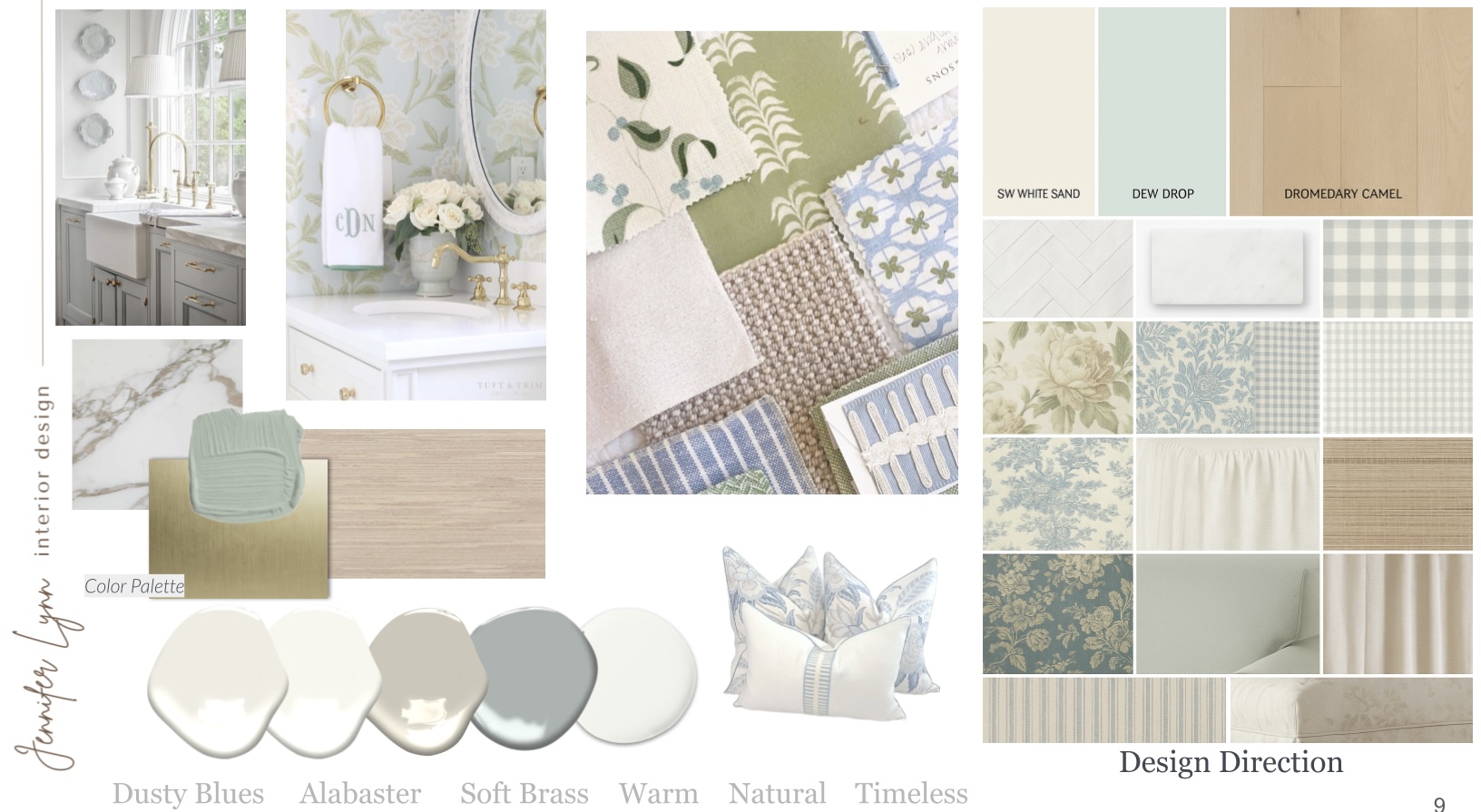
The Wildflower Palette is anchored around three color tones: Dusty Blues, Alabaster, and Soft Brass

This is a palette built for the mountains. It references the soft sky above Highlands in the early morning, the warm glow of aged brass fixtures in a well-loved cottage, and the creamy quietude of Alabaster walls that make a room feel lit from within. 

The Wildflower Color Palette — three tones, one cohesive language.

Tip: Choose two or three tones and use them everywhere. Warm neutrals on the walls, a soft accent color in the textiles and tiles, and a warm metallic in the hardware. When your eye can travel from room to room without stopping, the whole home reads as one generous, connected space.


The Kitchen: Where Craft Meets Constraint

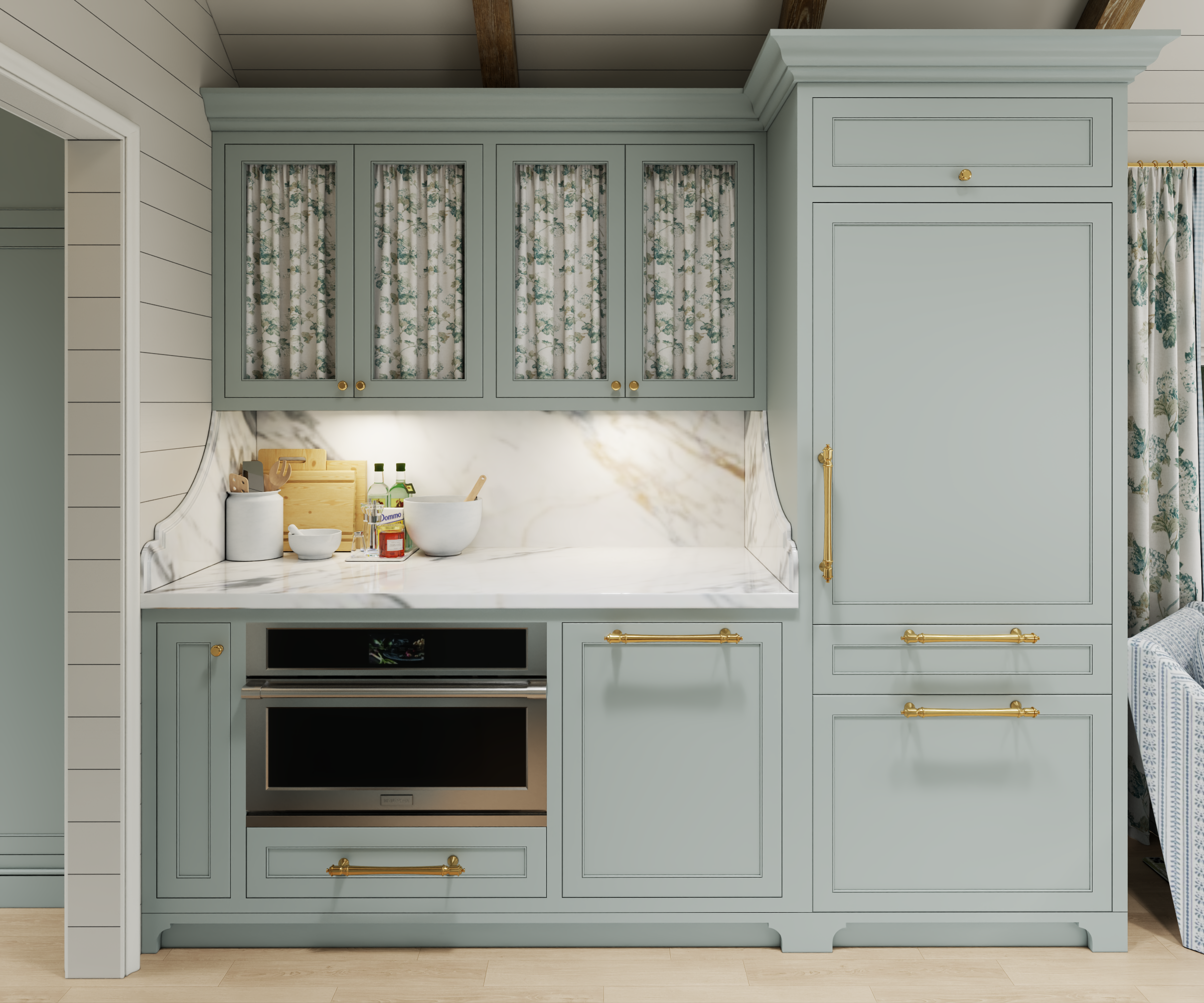
The refrigerator will have a cabinet panel fitted right over the front, disappearing into the cabinetry completely. This eliminates the need for large freestanding appliances, making the whole space feel calmer and more intentional.


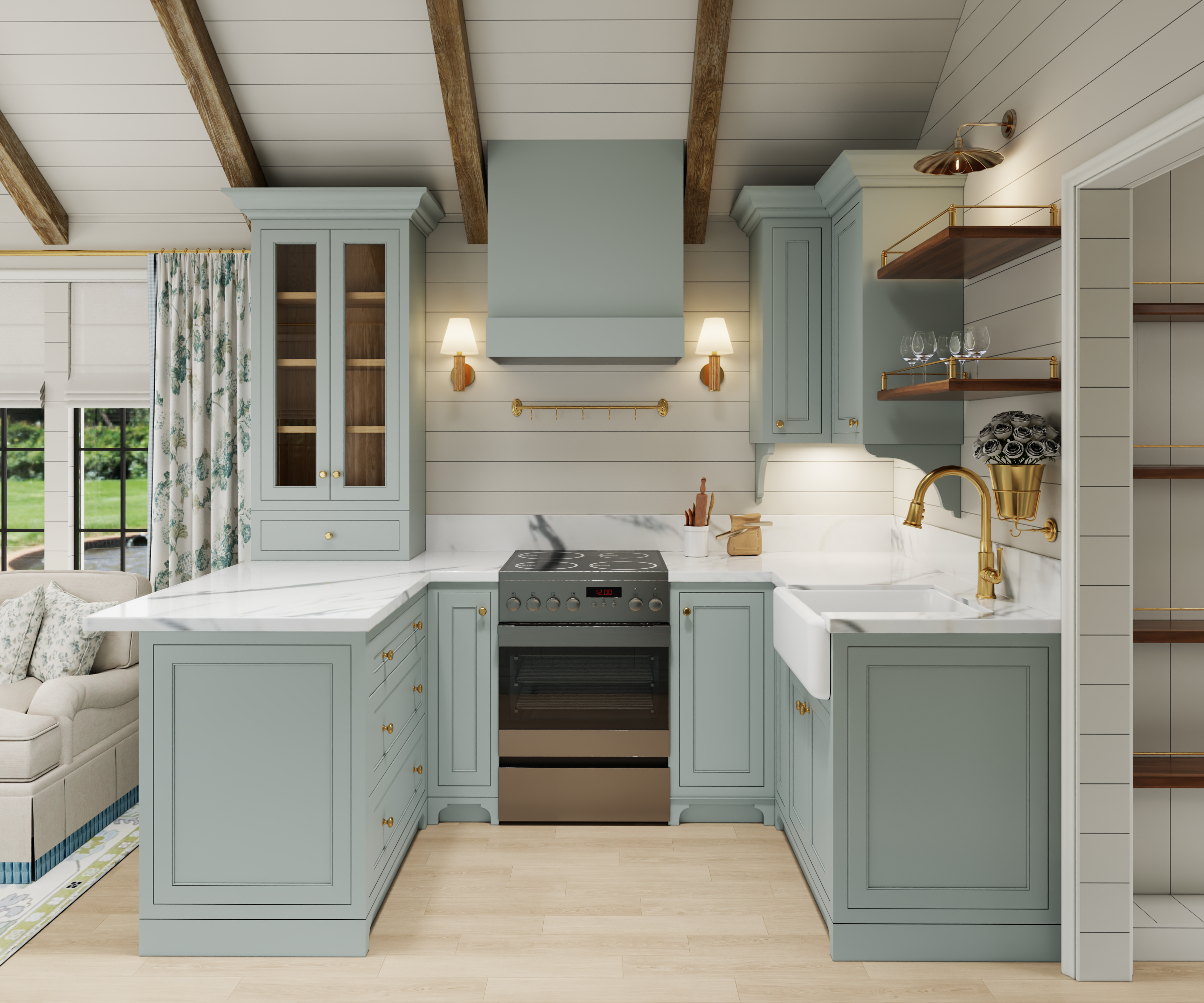
A compact sink was chosen deliberately,  it frees up more counter space on either side, which is what you actually need when you’re cooking in a small kitchen.

We plan to mix closed cabinets with open shelving rather than going for all cabinets. 

Why? Open shelving breaks the room up visually, makes it more accessible to reach things for everyday use, and helps a smaller space feel more breathable.

Tip: Match all your hardware finishes throughout the kitchen. It’s a small thing that makes an enormous difference. Mismatched metals are one of the most common ways a small kitchen ends up feeling visually noisy.


The Bathroom: Luxury in Miniature

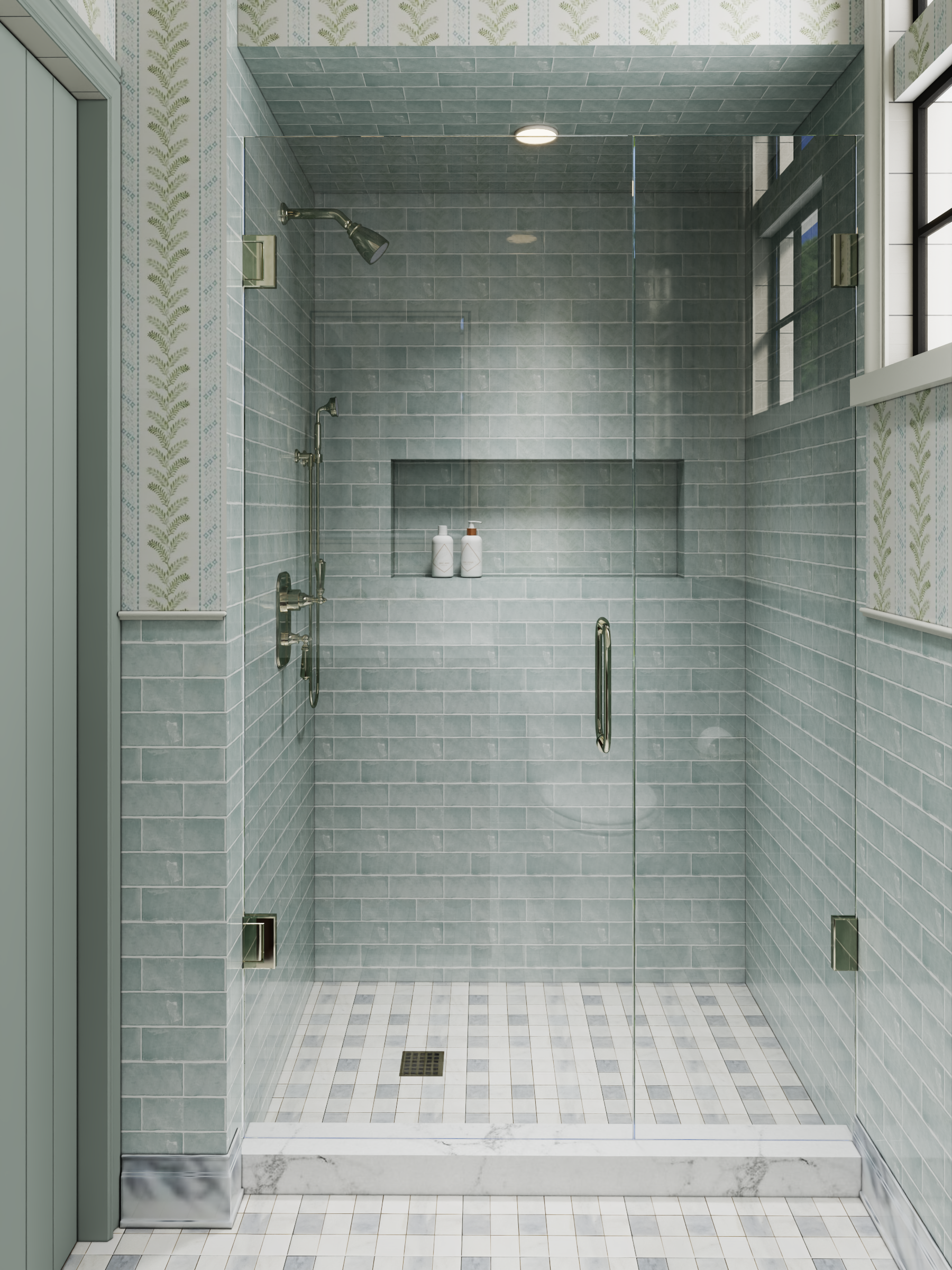
The goal for the bathroom is to build storage into the room itself so the surfaces stay clear.

Rather than hanging a rack in the shower, a niche was built directly into the wall, a recessed shelf that sits flush with the tile. It holds everything you need without protruding into the space at all. 


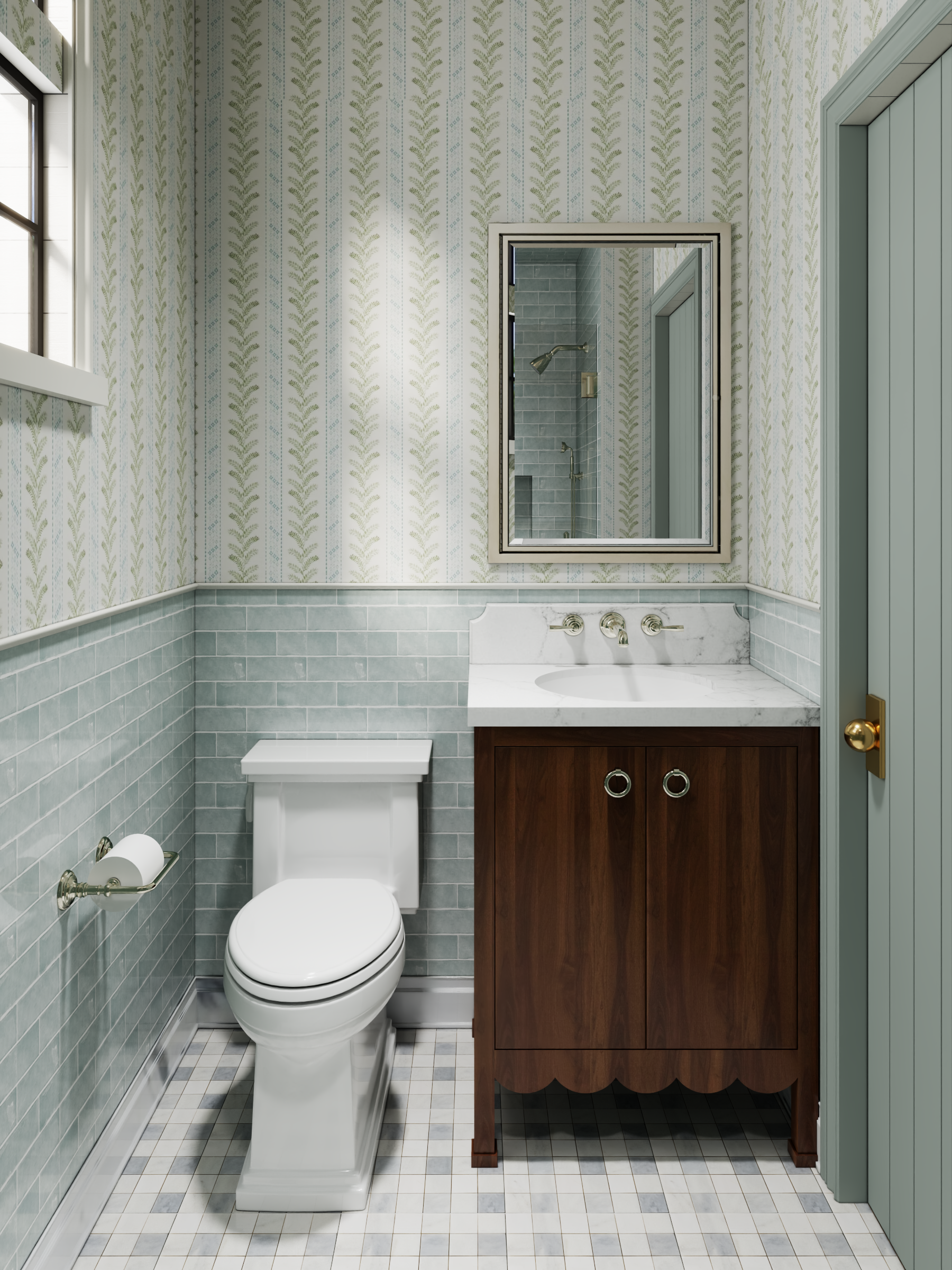
The medicine cabinet works the same way: it’s recessed into the wall rather than mounted on top of it, so you gain real, deep storage without losing a single inch of floor or counter space. 

In a bathroom this size, this kind of thinking is what makes a difference between a room that feels tight and one that feels thought-through.

Tip: Opt for a wall-mounted faucet instead of a typical deck-mounted faucet. This allows for the full width of the counter to free up, with nothing interrupting the surface. In a small bathroom where counter space is already slight, this helps. 


In Tiny House, luxury is not about size. It is about the quality of attention paid to every surface the eye lands on.

The Bedroom: Designed to Actually Help You Rest

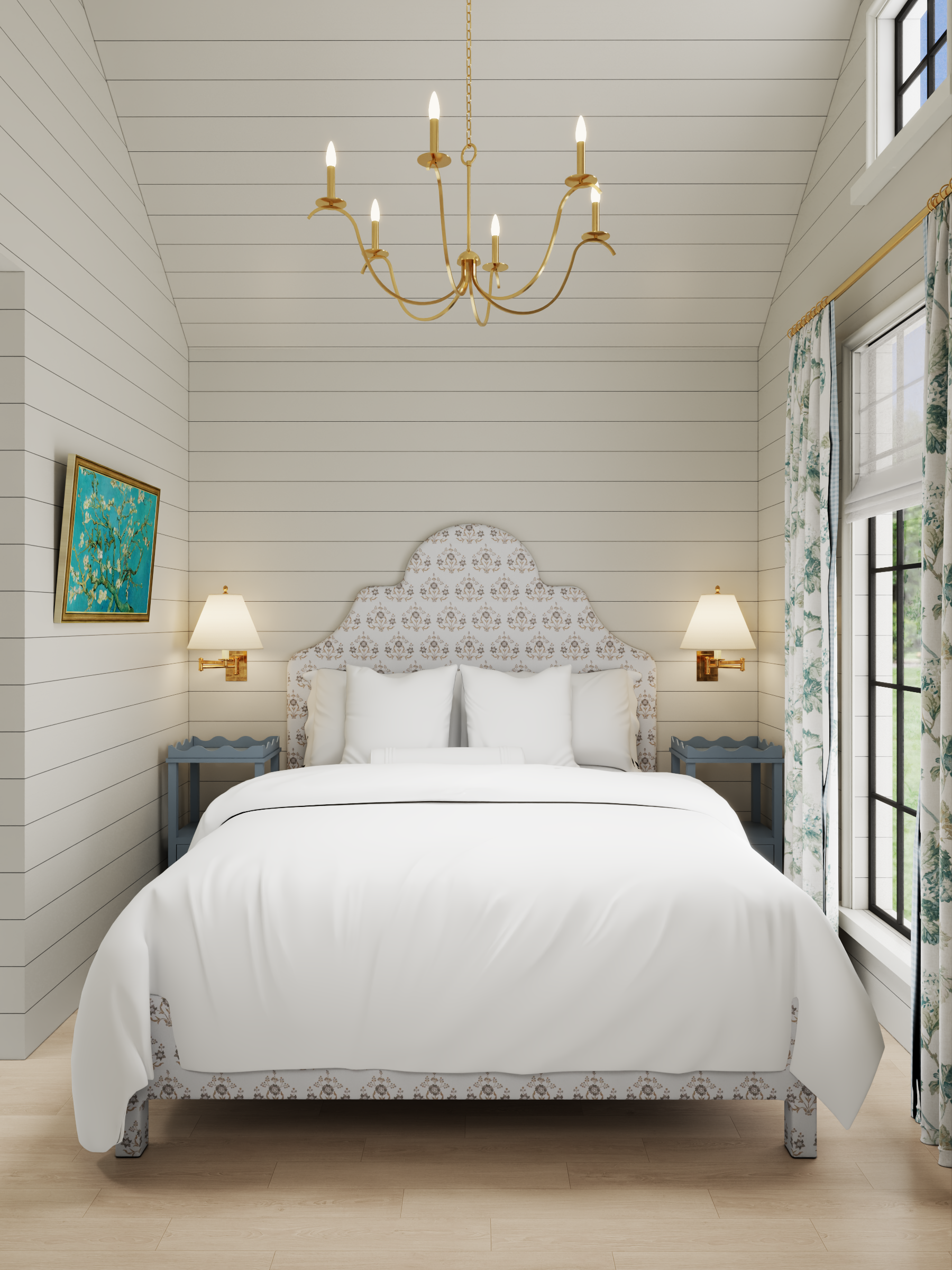
The bedroom in a tiny house can easily become just “the room where the bed is.” We want to make it feel like a real retreat. Somewhere where you genuinely want to spend time, not just a space you fall into at the end of the day.

The ceiling will be getting a treatment, either exposed beams or a paneled wood application overhead. This decision is entirely functional in terms of how the room feels: a finished ceiling draws your eye upward, which makes a small room feel taller and more open. 


We plan to include one beautiful, well-scaled headboard behind the bed. This will give the room a focal point, making the bed feel like the center of the space and instantly elevating the whole room.

Tip: The bedroom window is positioned at the highest point of the vaulted ceiling. Flooding the room with natural light and framing a view of the mountain tree line rather than a neighboring wall or roofline. A beautiful view, even a small one, makes a room feel like it extends beyond its own four walls.

The Living Room: Every Seat, Purposeful

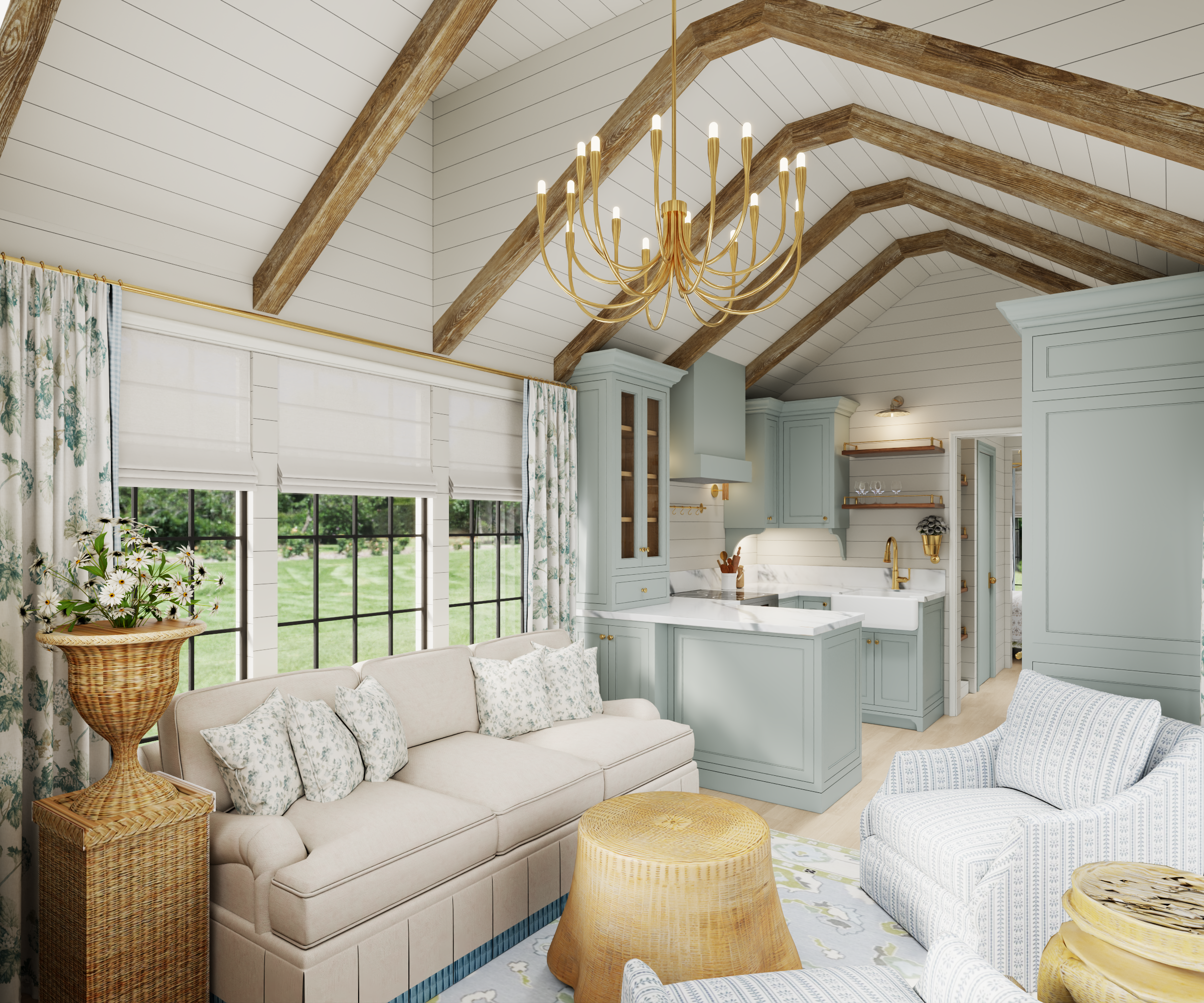
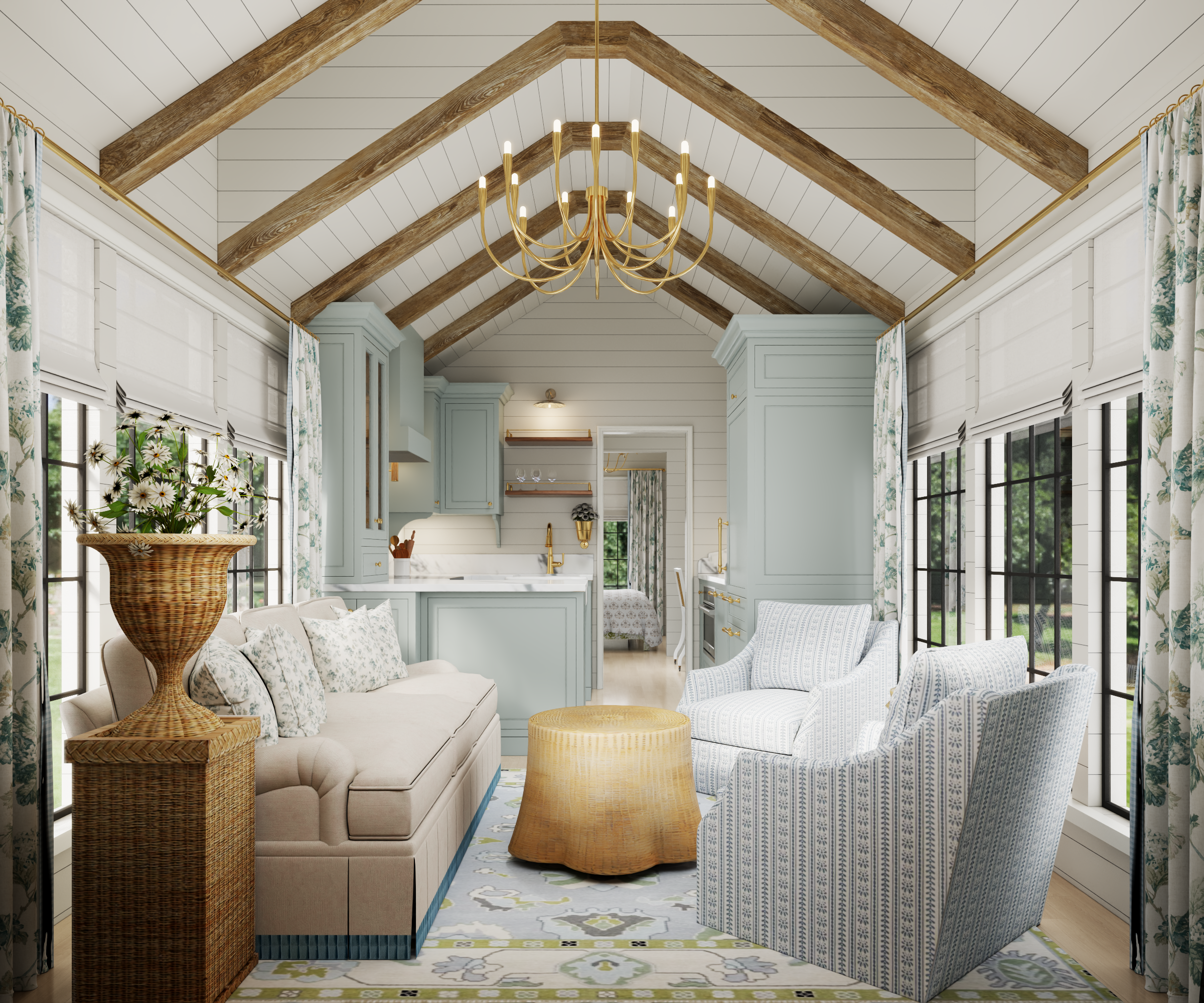
The guiding principle here is simple: maximize the space with as much seating it can offer without making it feel cluttered. 

The sofa is a classic, tailored silhouette with a skirt along the bottom. That skirt detail isn’t just aesthetic. A skirted sofa hides the legs and the floor beneath it, which makes the sofa feel less imposing in a small room. 

The curtains will be hung high and wide, close to the ceiling, and extending past the window frame on either side. Making the window look larger than it is and the ceiling feel higher.

Tip: Always hang curtains higher than the window frame, ideally just below the ceiling, and past the window on each side. It costs nothing extra and makes every window in a small room look significantly larger and more grand.

What This Project Teaches Us About Small Space Design

The biggest lesson from this project? Small spaces reward people who pay attention. When you only have 500 square feet to work with, you have to be more deliberate about what you live with.

Same floors throughout. Colors that flow from room to room. Hardware that matches. Appliances that disappear into the cabinetry. A sofa with real craft in it. A bedroom that actually feels like a retreat. These aren’t complicated ideas, they’re just decisions made with care. And that’s what Tiny House is really about.

We’ll be following this project all the way through to its June completion in the mountains of Highlands, NC. Follow along with us — the best details are still to come.